In this complete guide, you will understand what viscosity grades mean, how ACEA standards work, and how to select the oil best suited for your engine.
1) What is an engine oil used for?
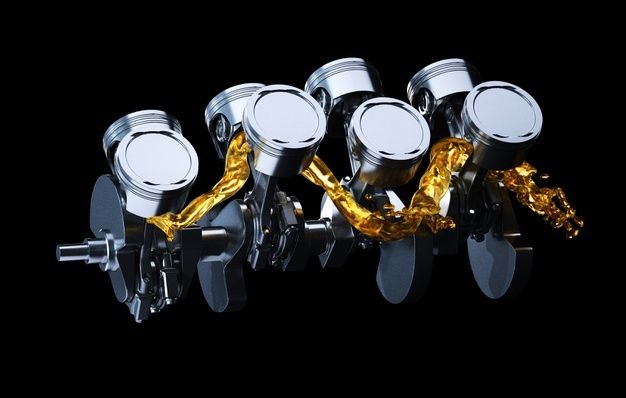
Engine oil plays an essential role in vehicle health. It:
·reduces friction between moving parts;
·limits wear and overheating;
·cleans deposits and impurities coming from combustion;
·ensures sealing between piston rings and cylinder walls.
Without properly maintained oil, engine parts slide less easily: friction increases, wear accelerates, and the engine can wear out much faster.
2) How to read a viscosity grade like 5W30?
An oil's viscosity grade is always presented in the form "XWY", for example 5W30. This indicator expresses the oil's fluidity at cold and hot temperatures.
The first number (before the W)
It indicates the oil's behavior in cold conditions (W = Winter).
The lower this number, the more fluid the oil is upon starting.
→ Example: 0W is more fluid than 5W, which facilitates starting in cold climates.
The second number (after the W)
It represents hot viscosity, when the engine reaches its normal operating temperature (~90°C).
The higher it is, the thicker and more protective the oil remains.
→ Example: 40 provides more protection than a 30 at high temperatures.
Examples of oils and their uses
·0W20: very fluid, ideal for recent engines and cold climates, but lesser protection when hot.
·5W30: excellent cold fluidity, standard protection; perfect for daily use.
·5W40: very good hot protection, ideal for long trips and hot climates.
·10W40: less fluid when cold, thicker when hot; recommended for older or high-mileage engines.
3) ACEA standards: an essential criterion often ignored
Viscosity is not enough: every oil has an ACEA standard, defining its performance level and compatible engine type.
ACEA categories
·ACEA A/B: petrol and diesel engines without particulate filters (e.g., A3/B4).
·ACEA C: engines equipped with particulate filters (DPF), “Low SAPS” oils (e.g., C2, C3, C4).
·ACEA E: utility vehicles and heavy-duty trucks (e.g., E7, E9).
4) Oils recommended by TPM Group
-For petrol and diesel engines (FIAT, Jeep, Alfa Romeo, Lancia):
·SELENIA, official lubricant of the Stellantis group, recommended for maximum protection (SELENIA 5W40 – ACEA C3: excellent stability, high thermal protection).
-For IVECO utility and heavy-duty diesel engines:
·URANIA, specifically designed for engines subjected to high thermal loads (URANIA 10W40 / 5W40: oxidation resistance, long drain intervals).
Conclusion
To properly choose your engine oil, keep three essential criteria in mind:
1.Viscosity (e.g., 5W30, 10W40...).
2.The ACEA standard suited to your engine type (A3/B4, C3, etc.).
3.The manufacturer standard, essential to preserve warranty and performance.


.png)





Comments